Showing posts with label People of my country. Show all posts

Tuesday, April 26, 2016

THE PITFALLS OF CASTE POLITICS


The past few months has been alive with news and views of Rohit Vemula and Kanhaiya Kumar both dalit students and political aspirants. Rohit played the death card to highlight his views or predicaments whatever one wishes to call it while Kanhaiya wore the crusaders hat and took campus politics into every house-hold, right into their drawing room during prime time. In the case of Rohit, the establishment with a tongue which is forked on the politics of caste, couldn’t help mismanage the whole incident. In the case of Kanhaiya, flowing in the center of the discussion was the subject whether he was anti-national. That brought into the arena multiple views about what constituted nationalism and then the subject digressed into patriotism and disrespect towards the armed forces. The drama soon shifted to Parliament and what followed was the big eyed histrionics of Smiti Irani, a minister who has no idea about the pressures of a PhD student. Very soon the arguments became partisan and it was proclaimed that loud expressions of ‘Bharat Mata Ki Jai’ would be akin to waving the RSS propaganda. Later on as the melee continued, some students of an engineering collage in Srinagar Kashmir couldn’t contain their happiness as Indian cricket team lost to West Indies while a few others got thrashed by the state Police for creating a ruckus with the Indian national flag. All this back and forth exchange of heat and dust was being conducted under the umbrella of freedom of expression or ironically rather the perceived lack of it.

First, arguments should happen, even if it becomes a circus, as it is a healthy sign of a mature democracy and as long as nobody is trying to hurt another physically, they have the right to say anything, even something grossly stupid. In retaliation maybe they get out shouted. In such an atmosphere people tend to modify their views and maybe learn something new. The spectators also take some learning home. In no case should anyone try to stifle the voice of another. Inspite of myself I have to concede that the noise which Arnab Goswani creates on Times Now is good even though I hate watching it.

Secondly let us look at the root cause; the problem of caste discrimination. Caste system today is like a weather beaten mountain full of rocks which though unmovable has developed several cracks and with vegetation growing from every nook and corner. It is regrettable and a crying shame that it still remains non-budging. Caste is the English language word for the pre-Vedic or could be even the Vedic varana system of classification of people and their rights and obligations on the basis of their work skills and contributing abilities towards society. The knowledge bearers / teachers and the soldiers / protectors snatched a higher ranking. This is a practical and commonsense approach to acknowledge those who had the ability to help others realize their passions and those that protect while they learn the requisite skills. The farmers, traders, artisans and other service providers accepted the third ranking of those who are required in a society and helped to make it vibrant and colorful. The last category was left to those who couldn’t learn any skill or those who were too rustic to be molded or most probably those who were forest dwellers and outsiders to that specific society and its way of life. Apparently work skills and contribution to society was a matter of personal abilities and likings. People could move up and down the varanas based on their personal choice and it had nothing to do with rights by birth. Probably such segregation served some purpose because it became extremely popular and stuck on. People soon realized that the rights and benefits were too attractive to be given up and thus they manipulated it to teach their skills to their children even forcibly so that they do not get downgraded and lose out on living standards.

Over a fairly long period of time in came Alexander, then the Turks, the Mughals and finally the British. Society changed. Passing on skills sets to children was no more essential. What remained was the existing caste of the family which became permanent. The entire concept has been rendered useless now because (a) the lesser varanas had no way to get rid of their caste even if they have better skill sets and ability to contribute to society, (b) the higher varanas still control faith and resources which are important to living (c) the higher varanas find no motivation to give up privileges which they have become accustomed to over several generations. This dilemma has lead to social unrest; however unrest in society due of caste considerations is not a new phenomenon. If I may be permitted my mirth, I do subscribe to the opinion that Indian mythology is not all fiction, it is part itihasa as well, or in other words, there are a lot of facts which go unacknowledged. I would like to draw upon the story of Parasurama, a Brahmin, who vowed and also is reputed to have killed several thousand Kshatriyas for the reason that the latter community were either misusing their privileges or were ill treating the Brahmins or in were interrupting his ambitions. Another inference that I draw from Parasurama is that all the four varanas were not defined in a vertical manner but rather in a horizontal. To start with all of them were described as equal, and segregated by their contribution to society. Subsequent developments of war, security, religion, rituals, food and material comforts were reasons to pitch one community against another and society ended up in accepting one community above others with the Shudras or Dalits taking the last position.

Returning back to where we started, a major casualty of the caste politics has been the alienation from the feeling of nationalism. That society which considers one person superior for the mere chance of birth can never bind itself together as a nation. That society which considers some sections so inferior that others cannot be permitted to mix with them, can never bind itself together as a nation. Such segregations are breeding grounds of hypocrisy; where if a Brahmin commits a crime he is let off with a warning but a Shudras or Dalit is thrashed and left to die, where fruits of development is restricted to one’s own while others are denied and ignored, where one justifies one’s own corruption as a no-other-alternative or as a way of life while criticizing others. How does one convince to nationhood a sufferer due to society’s indifference? History is replete with stories of traitors to the national cause.


The demography of this country is slowly but surely tilting towards the lower castes and to my mind the best way ahead is to totally dismantle the caste equations, and I really mean totally. Caste comes in handy in certain aspects of life for instance while arranging a marriage alliance and while evaluating the extent of religious rituals. Even in such neutral regions it would be better to find some other alternatives and bypass the caste factor. People have to give up on identifying themselves with their caste, and look up for some different paradigm which will consider all people equal and rather evaluate them based on their skill and contributing capability. Today, we can see that while ordinarily people don’t concern themselves with caste when dealing with others in their endeavor to earn their daily bread, however some disgruntled ambitious elements are manipulating this subject for their political and economic benefits. 

Tuesday, November 24, 2015

TOLERANCE - AN INDIAN PERSPECTIVE


Biki my brother has two kids. The elder one Dhiaan is four years old and his younger sister Parthavi is two years old. Parthavi wants to do everything which Dhiaan does, wants everything which her elder brother has, including playing with his toys, and also displacing him at being pampered by their parents. Possibly she evaluates her self-worth by comparing how well she fares against her brother. Dhiaan on the other hand is annoyed at this emotional blackmail by his younger sister. He senses a visible loss at being dotted on whenever Parthavi tries to shift all focus of attention to herself. He possibly feels insecure and that definitely leads to the breakdown of his normally good behavior.

This scene is very common in families and several couples must have experienced such sibling rivalry, many people must also remember this from their own life story. It is not the fault of the siblings that they behave so, nor is it their fault that they have been placed in such a situation by their parents. Of course how can anybody blame the parents also? Its life after all, isn’t it! We advise and cajole the elder one to bear with the younger one, sometimes scold him too for being selfish. We more often than not succumb to the tactics of the younger one. In the end we see better judgment in taking a back seat and let them fight it out and decide for themselves.  I find an interesting parallel to this sibling competition scenario in today’s inter-religious inter-caste landscape where intolerance has once more raised its fierce head.

Today the nations’ social fabric is once more torn by religion and by caste. Some sections of the population have once more become extremely intolerant. I use the phrase ‘once more’ to emphasize the fact that such episodes are not new. Maybe if I may dare say, we have managed to rise slightly above the gender, colour and geographical divide, though the fault lines are still visible. However much we proclaim that diversity is our strength, each diverse group is at pain justifying how it is secular while others are not. It is very easy to get carried away in this emotionally charged atmosphere. We all end up taking sides which are familiar to us, each religion sides with their own and each caste side with their own. Each group feels justified in its thoughts, words and actions. Each group wishes to enforce its writ or get it acknowledged. Each group carries the opinion of having being wronged by the other or by the state or maybe even fate. Each group behaves as if its existence is under threat. Insecurity rules over reason. Fear rules over love and this happens when religion rules over spirituality.

People often refer to some trigger some past cause to explain the present disturbance. While nothing happens without a reason but having said that, one must not lose sight of the fact that causes are also events which can be easily misrepresented and misinterpreted. A normal consequence, a natural sequence can be given an intention ridden twist, a political or even a partisan colour. Sometimes the cause also has a previous cause which gets overlooked. Every reaction generates some unnecessary counter reaction. Definitely a conscious and deliberate acceptance of the situation would be more advisable; however it is easier said than done in this impatient age. Today Allopathy is more popular than Ayurveda. People just want a quick-fix solution which may be ineffective in the long run or could even be counter-productive.

It is very interesting to notice that India has gone through such phases of social struggle or if one wishes to call it social mayhem time and again. Sometimes it became a fight for survival, sometimes it was to fight against the present regime and sometimes it was an altercation of egos. Researchers should dwell into the root cause of these frequent incidents, whether it has something to do with a typical psychology of the people of this region or even their genes or whether can it simply be attributed to bad luck.  A broad brushing through history reveals some of these shades: Post migration of the Indus people – The old culture was destroyed and replaced by the Vedic culture. Even the spiritually inclined and open Vedic culture changed and became religious and closed. The old native gods disappear or almost, now they can only be seen in few villages and even fewer houses. New gods were created, new religion professed, where rituals and instant benefits took center stage. The caste system made a grand appearance and natives, the aborigines were either converted or segregated. Post the Buddha- The classical clash between the spiritual and the religious. He said there was no god and neither did he respect the caste system. Political patronage became the means to survival and court intrigue ruled the roost. Even the Buddha was poisoned and murdered. Over time both groups modified their respective stands, modified their practices and also their literature. Post the Mughals – Foreigners enter the scene yet again, this time in search of gold and glory, introduced a different way of living and a different religion. This time it was a clash of cultures. Bitter conflicts ended with slaughter of humanity and only those who converted were spared. Cow protection became a rallying point for the Hindus. Destruction of temples and looting its gold became rampant. Post the Christians – Yet another foreigner comes in, again in search of gold and glory, and introduces yet another god and a very different culture. They convert people with a missionary zeal to increase their footprints and social acceptability. They take away local raw material and work, bring back finished goods, take away the profits and livelihood, and make everyone a slave. Modern times post independence – Now there are too many gods, too many religions and too much population. Old habits die hard and the religious plus caste fights continue. New constitution proclaims everyone is equal and to balance the past sins introduces reservation policy. This placating of certain castes is now beginning to hurt, however there is no way out.

Tolerance or intolerance or the fight against both, whichever way you look at it, now runs in the psyche of the people of this land. This has lead to two different schools of thoughts. One says that India was never a tolerant nation; there has always existed these killings and destruction. The other says that when inspite of so much struggle if today we are able to call ourselves a nation, then it is only because we have slowly come to accept and tolerate the difference in all of us. Over time the number and intensity of such incidents have reduced and this trend will continue. Maybe that argument holds weight and promise for the future. 

Sunday, March 9, 2014

WHY THE HINDU BRIGADE IS WRONG


When a Tiger is convinced that it is a Sheep, then it creates problems for itself. But when someone else is convinced that the Tiger is a Sheep, then it creates problems for everybody. Of late members of the Hindu brigade are aggressively trying to protect the interest of the faith and making the wrong news in the process.
84 year old Dinanath Batra who managed to pulp the remaining copies of a published book on Wendy Doniger’s understanding of Hinduism and in the bargain exponentially increased the circulation of its soft copy, declares rather shamelessly "Freedom of expression cannot trample our identity, culture, religion and tradition. It has to have a limit. We cannot allow anti-national writings". Priceless! Old man, thank you very much, the great Hindu religion which has been in existence since the past several thousands of years desperately needs shoulders like yours to protect it from the evil intention carrying westerners. I had seen the book “The Hindus by Wendy Doniger” a long time back at the book-store and after going through the back cover I had opined that it was not worth reading. But now because of this controversy I felt that I probably should read the book. Definitely! I myself downloaded a soft copy. To my disappointment Wendy Doniger is not the villain that she has been made out to be. I would rather place the blame squarely at the doors of the great Hindu religion itself. It is so vast, so multi-faceted and multi-layered, so deep in its meaning, so full of parables and metaphors, so doctrinal and simple at the same time, that anybody and everybody reading a part of it is bound to experience a different understanding a different meaning. And also each time they read it. Therefore it is not strange and new when someone reads sex in the images of Hindu gods. We Indians do it, so why fault the foreigners. In fact to put it squarely, when you feel that you have understood the correct meaning of the scriptures, precisely at that moment you should tell yourself to stop fooling around and to look deeper.
A religion and culture that survived not one not two but many thousands of years, that survived the fall of Indus and Saraswati river civilisations, that survived numerous popular religions which sprouted in its wake like Buddhism, that survived foreign invaders like the Mongols, the Turks, the Mughals and the British, that survived numerous language changes like Sanskrit, Hindi and English, does it really need protection. If it was to have been extinguished, then it would not have survived for so long. However let nobody remain in the misunderstanding that it has survived in its original form. The current Hindu religion and culture is not the same that was practiced during the time when the Saraswati flowed. It also was very different at the time when the Buddha lived and preached. It has evolved, it has reinvented itself, several times. Every time it has come back strongly, become more relevant to the times, to show people the way to live. In fact, if it had remained unyielding, uncompromising, unchanging, then it would certainly have been discarded by the very people of this land. The people of this land have no dearth of religions to choose from. The soil of this land is spiritually fertile. Therefore for the same reason, the Hindu religion needs no self-appointed protector. It is capable on its own.
Essentially change is an evitable must. The Hindu Brigade should understand this. Recently the Rashtriya Swayamsevak Sangha went on record proclaiming that it would not compromise on moral values, social systems and traditions in the name of individual freedom and would not accept homosexuality and live-in relationships. It seems to me that the days of RSS are numbered. They better not be so rigid in their stance if they wish to remain relevant. They should be more nuanced in their response to the reality of the environment.
While nobody denies the ills of society, one has to accept that society has never been free of ills right from the day humans started living together. Neither do we live the same life style that existed thousands of years ago. Indian society has seen rituals like Sati come and go. We have seen customs change, we have seen attitudes change. We have changed from joint family to nuclear family. While our religion exults the story of Shravan, today we cannot find place for our parents in our homes. While our religion glorifies a vegetarian diet, today we finance poultry and fisheries as a business to grow and kill life for food. Times change and people change.
Sexual inclination has changed. Rape or forceful sex has become rampant. Homosexuality is also a human condition. Live-ins have become more common in the present times. These are symptoms of social ills and social changes. The Hindu Brigade should instead rather focus on the root causes instead of addressing the symptoms. Today a father cannot marry of his daughter for the want of dowry money. Khap Panchayats won’t permit same gotra marriage. Marriages between different religions are also looked down upon. Life in the villages has lost its charm and people prefer the hazards of urban life. Economics has scored over the quality of life. Why don’t we hear anything from the Hindu Brigade on these matters. Banning a book, deriding freedom of speech, ridiculing homosexuality and live-in relationships is taking the easy way out to oblivion.

Sunday, November 17, 2013

THE CULTURAL IMPACT OF SACRIFICE ON CORRUPTION IN INDIA


The length and breadth of India is over shadowed by the disease of corruption. Geography will pale in comparison when one weighs without any exaggeration that the depth of life in this country and its basic fiber is grossly impacted by the tentacles of corruption. Before rushing ahead in this tom-toming of who else is also corrupt, let us spare a thought on what exactly constitutes corruption.
Transparency International states that; “Corruption is the abuse of entrusted power for private gain. It hurts everyone who depends on the integrity of people in a position of authority.” While the Oxford Dictionary defines corruption to mean; “(i) dishonest or fraudulent conduct by those in power, typically involving bribery, (ii) the action or effect of making someone or something morally depraved”. I believe that the moment has arrived for a broader reading of the import of this definition. To my mind, it would be most narrow-minded, very immature and blatantly foolish to consider and recognise only those people in positions of organised authority like government and the bureaucracy as the conspicuous targets. To my mind every individual has an extent of power over his or her own self and this aspect of position of authority is being conveniently overlooked. When one conspires with the Gods, when one tries to manipulate the natural course of events by invoking the supernatural powers of the universe through the various ritual of sacrifice, to beg and bargain for unwarranted gains, it certainly amounts to bribery which is a brazen example of corruption as well, at a very personal level. That should bring us to the next question about what is this stuff called rituals of sacrifice.
When one digs into the facets of life during the Vedic times in this region which arguably lasted till about 400 BC, one encounters the oft repeated mention of Yajna. The basic ritual according to Vedic tradition is Yajna. To borrow directly from various materials available on the internet on the stated subject “the Sanskrit word Yajna is derived from the root ‘Yaj’ which means to worship, to sacrifice, to bestow, and to offer. The word Yaga also has the same meaning, worship in the form of offering oblations or a sacrifice for the gods. It is also defined as the Tyaga – giving up or offering – for any specific deity or some deities at the same time. It is a link between the gods and the human beings. The essence of the sacrifice was a proof of one’s devotion to the deity. The human-divine link played by the role of Yajna was to obtain gods favors either in the external worlds or in the internal (psychological) world of the practitioners, for obtaining health, wealth, long life, offspring, cattle, victory, good harvest, freedom from evil forces, total salvation. The sacrifices in the form of offerings were made to the fire god Agni and are the first original and basic dharma according to Rig Veda”.
The Vedic practice of Yajna or sacrifice has continued into the Hindu religion and right into the present times.  Today Yajna is conducted during occasions as well as non-occasions, both at public temples as well as at private homes. The practice has worked its way into the blood of the inhabitants of this region. It has become a sort of basic trait that defines the Hindu people. The influence of Yajna on the behavior and psyche of the Hindu people which has now adapted into certain natural characteristics namely; (a) never to be satisfied with whatever is there (b) to desire more but never to work or strive hard (c) to find some short cut means (d) the end always justifies every kind of means. Somehow the concept of sacrifice always works. When you give up certain privileges bestowed to you by nature, it is always replenished with better set of privileges. The Hindu’s have known this secret since thousands of years and have practiced it till it has become a second nature to them. Temples in India have always been known to possess unheard of riches and even today we see such practices continue. The Hindu people sacrifice their wealth to the temples in the search or rather craving for more wealth, instead of (and sadly so) working hard for it. It has been the same story for every other kind of benefit.
Bribing the Gods for various favors is an unashamed form of corruption. It is an abuse of natural law. It is morally depraving and a dishonest act against oneself, against one’s karma. Let us see and accept the truth about ourselves, that we are a very corrupt people, we have corruption in our genes. There is no point in blaming the bureaucrat, the politician, or the businessmen when the nation itself is corrupt.

Monday, June 24, 2013

RAJU BHARWAD IS MY HERO


There was a news article in the media last month about a very ordinary citizen in this country, an auto rickshaw driver belonging to Ahmedabad Gujarat called Raju Bharwad. It was a lone piece tucked away in one corner, not wanting to and neither expecting much attention. Raju Bharwad received a cheque from the Gujarat government of Rs. 1.9 crores as a settlement for land acquired, which his family had owned until some 25 years back at Sanand. They had sold the piece of land for Rs. 9 lacs at that time but the sale was not registered in the names of the new owners. The erstwhile owners as per land records thus received the compensation. Our dear Raju Bharwad however thought that the money does not belong to him, if he accepted and encashed the cheque which he very well could have, the present owners and tenants would suffer and therefore he went and returned the mighty amount. As an auto rickshaw driver the amount could only be of his dream, yet he had it in his hands, and the cheque also was in his name, and then he answered the call of his conscience. Sir, you are my hero.

One can imagine the conflicts that were going on in his mind, the mixed feelings, the priorities and the problems in life, the opinion of friends and relatives, and also the moral high grounds of honesty. As an auto rickshaw driver his earnings would be meager and he can never reach or even think of reaching the magic figures which were mentioned on the cheque. He has a family to take care of and costs of livings are not moving south. Each friend and relative would have an independent opinion on what best could be done to retain the money as well as the pitfalls of being honest. Raju Bharwad must have had a tough time in countering all these thoughts and firming on his choice.

The courage and the principles of this man and the way he has been brought up by his parents has to be appreciated. Normally I would associate such strength of character with Indians who lived a few decades ago. The present generation in this country is devoid of such beliefs and definitely considers them traditional and reckless. That Raju Bharwad’s resolve is made of steel came as a pleasant surprise to me, that such great and young men still walk this land bring tears to my eyes. A man who would not bow to temptation, who would disregard his own discomfort in front of the discomfort of others, who is contented with his own life poor as it may be, I salute such an individual and pray that this country should see a swell in their numbers. Thank you Raju Bharwad for being a torch bearer, this nation needs such men like you to show that we can get rid of corruption, dishonesty and selfishness from our midst if we so make up our mind.

Friday, July 20, 2012

RAJESH KHANNA – a layman’s interpretation of the phenomenon


I was born in the year 1966 and Rajesh Khanna started his career a short while later. He became a phenomenon in front of my eyes as I grew up observing the hysteria around me. In those days we used to stay at Margaon Goa a nondescript town not too far from the sea shore with two cinema theatres. On Saturday’s my school used to function for half-day, invariably my mother used to hurriedly push in some lunch into mine and my sisters stomach and then along with her friend Neela Patkar who also was our tutor, we all walked about a kilometer and half to Vasant cinema to reach in time just before the ticket counters opened for the matinee show. Barring the rainy season and the times when we went on holidays to my Grandfathers place, the Saturday matinee movie was a once a month feature in our lives. I remember having seen Dilip Kumar, Rajendra Kumar, Dharmendra, Dev Anand, Rajesh Khanna, Hema Malini, Mumtaz, and Asha Parekh on the screen, in between those moments when I dozed off inside the cinema theatre.

At that small age I understood very few things about the movies. There were some common elements like songs and dances in every movie, a scheming villain and a big fight with the hero just before the end, there were decked up actors and actresses and old crying parents in every movie. But one man was special.  There were other good looking actors and even Dharmendra had a disarming smile, yet Rajesh Khanna was special. Great songs could be attributed to Shammi Kapoor, Rajendra Kumar or Dev Anand but Rajesh Khanna was special. He was not a swashbuckling macho hero, nor did he perform great stunts. He did not possess the acting abilities of Dilip Kumar and when it came to box-office success, Rajendra Kumar was often called Jubilee Kumar, yet Rajesh became the Superstar.

In those days when there were no televisions or internet, people walked over to their neighbour’s home in the evenings for a cup of tea or dinner. Inadvertently Rajesh Khanna was the topic of conversation amongst men and of gossips amongst the ladies over drinks and food. I remember that my father did not like him one bit and my mother swooned at his mention. Most adored him and his movies had a great repeat value. A common boast in those discussions was how many times a person had seen his movie. Folks deliberated for hours, the story line, the script, the acting performance, the director, playback singers, the music director, the melodies, the personal life of the actors, and finally as was customary the main cause for success of the movie was conferred on the shoulders of Rajesh Khanna.


When I look back and try to decipher the madness, the only factor I can see that worked for Rajesh Khanna was his genuineness. He was a man of independent thought and lived life at his own terms. He remained in his personal life a very proud and strong willed yet a vulnerable man and it was this same vulnerability lurking in the shadow of strength that he projected in his earlier roles which made him almost fragile and endearing. This is a paradox since that acting is appreciated where the actor overcomes his personal nature and performs as the character of the role requires. But Rajesh Khanna as he was in those initial days was also exceedingly charming, stylish, a dream-boat. Forget the tilting of the head mannerisms and forget the million dollar smile, but when Rajesh Khanna cried or when he emoted a pensive moment or when wooed the heroine, or when he lightened the mood of his friend and family members on screen, his own personal vulnerability was on display. He was being himself. This invisible vibration is what touched and connected to the hearts of the viewers as they could see the genuineness of the man and not someone trying to act some irrelevant role. People loved his honesty and continued loving him as long as he portrayed himself with honesty in the role. With age Rajesh Khanna the person also changed. The fall of the Superstar started when he was offered such roles where he had to act and had to perform characters he could not connect with until much later in his career in the movie Avataar which once again saw Rajesh Khanna at his brilliant best.  


Tuesday, May 22, 2012

WHAT’S WRONG WITH US INDIANS?


A small but educated and diverse group of employees of a business got together last month in their Directors room to discuss the strategies for maintaining and if possible increasing sales. The problems that they were facing was myriad ranging from sharp rise in cost of imported material, to non-availability of indigenous material, to falling sales volumes, to change in consumer preferences, to increasing cost of production, to workers unhappiness, etc. All possible scenarios were analysed and factored in but no satisfactory conclusion was being drawn. I was sitting and witnessing the proceedings. Everybody was disturbed by the levels of uncertainties prevailing in the economy due to a host of national and international reasons. Economists and pundits always seem comfortable projecting the growth percentile for the country but sitting at the micro level there is not an inch of comfortable space. Growth feels distant given the chaos prevailing in the country today. Somebody in the group remarked that the country had set out on the path of liberalization two decades ago, had seen some unprecedented success but the road has ended up now because we as a nation do not know how to handle growth. The thought set me thinking. Are we Indians really incapable of handling growth? What’s wrong with us?

One very big reason that I can see is that we have all become narrow minded and individual centric. We no more trust the concepts of collective wisdom or the good of the maximum. All we want today is personal benefit. Since the beginning of the 90’s many people have become rich but many more have faltered, tried and failed. Over the years people instead of becoming concerned or happy with what they have achieved, were more focused on becoming concerned or unhappy with what others had achieved. They started gauging their personal success or failure by comparing with that of another instead of comparing what they had yesterday to what they have today. What started out in the early 90’s under the phase of need of the nation has now turned into the phase of need of the individual. Slowly the collective national feeling fragmentalised. Everybody found that each one was thinking of their own self. The economically weak people found that a homogenous group identity had some better bargaining power as against the weak individual. The election process came as a shot in the arm for those who could form some sort of homogenous groups and slowly regional parties took shape which transformed the single party majority rule into a coalition form of government. In the end today no one speaks about national interest, each group only have their own interest to focus on. In a way this country has returned to its roots as was visible before the British arrived. A wise sage has once said that little in security is better than plenty in fear but today we have forgotten our wise men and their words. We have transformed ourselves into a nation of fearful people.

Another major problem with us is the level of corruption which we have assimilated in our daily lives in every sphere of activity. As a nation we all have failed ourselves in allowing such base instincts to take control of our lives. As human we have allowed fear to win over faith, over our talent and ability and have adopted the instincts a weak and sly creature. I cannot call it animal instincts also because even animals won’t kill unless hungry. They atleast do have ethics and we have gone even below that level. It is a pathetic situation that we don’t trust each other, we don’t trust the rule of law, we don’t trust principles, we cannot be contented with what we have, we cannot wait for our turn to come, we believe in hiding our faults, we believe in projecting and protecting a false image. What to say about believing in God, we don’t believe in ourselves. Falsehood has become our creed. We very easily accept falsehood in others and contemplate to adopt the same as a natural sequence of events. By extending the logic of the argument an honest person is practically considered to be a fool, a person without any trace of smartness, a non-achiever, and a loser. Such practices do not pay in the long run but fortunately or unfortunately India is a young nation and it will take time for everybody to become old and realize the truth in the statement.

With such a legacy, how far is India expected to travel in the path of nationhood is anybody’s guess. Maybe the Orient was meant to remain mystic, spiritual and poor. My pessimistic conclusion is that we were never brought up to handle material wealth and my most optimistic conclusion is that if we want to progress on the material front then we will have to first mature as human beings and then mature as a nation. How much time it will take will depend on the collective desire of everyone. 

Friday, May 18, 2012

NO CARTOONS PLEASE, WE ARE INDIANS!

                                                         (Cartoon carried by The Hitavada newspaper Nagpur on 16-5-12)

Of late the Indian parliament has been debating on an issue concerning grave national importance. Impact of political cartoons on children! Obviously when we club the two words namely politics and children together, it causes deep concern and fear in our minds. No Indian would want our children to be influenced by our politicians. We do not want the future of this country to be jeopardized. Let ours be the last generation to suffer these pigmies’s impersonating as men. Please, let us spare the kids. Even though this was my initial reaction, on further going through the debates I realized that I am not on the same page as our honorable and wise Members of Parliament. How silly of me not to grasp that by viewing political cartoons which are critical of the politicians, the minds of our children will be biased. How dumb of me not to realize that our children will grow up with a preconceived notion that the politicians are a stupid lot.

How amazing! How convenient! These politicians trying to tell the country that they are all sincere and honest and inspite of their best intentions the media and the cartoonists are hell bent upon creating a bad impression about them. Are they trying to tell the country that this is all smoke without any fire?

Should the Members of Parliament be spending public money on debating such issues? Instead they could really all work with a selfless heart for the benefit of each and every citizen. It is this lack of right efforts that is bothering me; it is this wrong focus of cunning efforts that is bothering me. My annoyance is also because a trivial issue is being treated as crucial.  These politicians won’t raise a finger to polish their image but will raise their hands to bring it down upon those who show them the mirror.  It is only these politicians who are concerned about the cartoons because they don’t bother about performance, instead if they really worked hard then the entire country will no longer have any chance to view such cartoons. Can’t they realize such a simple thing?


The ruckus in the Parliament was raised on a four decade old cartoon about politicians who are dead and gone and reportedly were not affected by it. Recently there was another din in the West Bengal state government over a cartoon depicting the chief Minister in poor light and the cartoonist was packed away to prison. Cartoons are meant to lighten the hardships of life. They are meant to laugh at ourselves and our problems. Today if the politicians are our problems and when we have graciously accepted this fact of life, how can the politicians deny it? The whole debate sounded like a live cartoon to me. 

Monday, April 30, 2012

The Maharaja


I was at Vadodara recently on an audit assignment and took time out to visit the Gaekwad palace built by Sayajirao Gaekwad III. It is called the Lakshmi Vilas Palace, construction of which took 12 years and completed in 1892. Moving through the palace precincts was an enchanting experience and it made a statement about the man who built it. Apparently a lot of personal and state wealth would have gone into its construction but one gets the feel that the man behind it always had his people in mind. The palace was built by Europeans architects and designers but the structure is a combination of Asian and Western motifs representing the major religions in India; Islam, Hindu and Christianity. Going through the Porch, Entrance, Reception Room, Weapons Room, Coronation Room, Durbar Hall, etc., I somehow became very curious about the personality of the Maharaja and searched about him on the net. Information that was thrown up told a fascinating story and which I shall try to keep short and simple.

 The Gaekwads were primarily Marathas from the Maharashtra region and the name meant people who herd cows for a living. Following the death of Sir Khanderao Gaekwad the popular Maharaja of Baroda, in 1870, his brother Malharrao who was a gross tyrant and cruel character and had been imprisoned earlier for conspiring to assassinate Khanderao was prevented from succeeding him. Khanderao's widow, Maharani Jamnabai was already pregnant with a posthumous child; the succession was delayed until the gender of the child could be proven. The child proved to be a daughter, and so Malharrao ascended the throne. However very soon Malharrao for his misdeeds was deposed by the Secretary of State for British India and exiled to Madras, where he died in obscurity. With the throne of Baroda now vacant, Maharani Jamnabai called on the heads of the extended branches of the Gaekwad dynasty to come to Baroda and present themselves and their sons in order to decide upon a successor.

Shri Sayajirao Gaekwad was born at Kavlana as Shrimant Gopalrao Gaekwad on the 10 March 1863. His branch of the Gaekwad dynasty was a cadet branch descended from a morganatic marriage of the first Raja of Baroda and so was not expected to succeed to the throne. His father Kashirao and his three sons presented themselves to Jamnabai where Gopalrao unhesitatingly stated "I have come here to rule". He was selected by the British Government as successor and was accordingly adopted by Maharani Jamnabai. He was also given a new name, Sayajirao. He was the Maharaja of Baroda State from 1875 to 1939. Young Sayaji was hardly 12 years old at that time and was groomed in administrative skills by Sir T. Madhava Rao and an English gentleman F. A. H. Elliot under whose able guidance he became a great statesman, educator, and ruler with foresight and with a will to provide welfare to his people and is notably remembered for reforming much of his state during his rule.

The list of his exceptional economic and social contribution is very long and a few can only be highlighted here. Sayajirao was the first Indian ruler to introduce, in 1906, compulsory and free primary education in his state, placing his territory far in advance of contemporary British India. His economic development initiatives included playing a key role in the development of Baroda's textile industry, founding of the Bank of Baroda which still exists and is one of India's leading banks.  During his reign a large narrow gauge railway network was set up in Baroda State with Dabhoi at its focal point. Sayajirao envisioned a water supply scheme for Baroda in 1892 at Ajwa that would use gravity to supply drinking water to the people of Baroda and is still in use to this day. The large public park originally called Kamati Baug and now called Sayaji Baug was his gift to the City of Baroda. On the occasion of the Diamond Jubilee of his accession to the throne, he set apart large funds out of his personal as well as of the state funds for setting up a University in Baroda for the benefit of students from the rural areas of his state. He recognised talent from among his people and supported education and training of persons who in his opinion would shine in life. Those persons whom he patronised included Dr. Babasaheb AmbedkarDadabhai Naoroji, and Sri Aurobindo.  The Maharaja was a noted patron of the arts. During his reign, Baroda became a hub for artists and scholars. The celebrated painter, Raja Ravi Varma, was among those who spent substantial periods of time at his court. Sayajirao was also a patron of Indian classical music. Ustad Moula Bux founded the Academy of Indian Music under his patronage. This Academy is now the Faculty of Performing Arts of the Maharaja Sayajirao University of Vadodara. Apart from Ustad Moula Bux, Sayajirao’s court boasted great artistes like Ustad Inayat Khan and Ustad Faiyyaz Khan. In 1914, the first All India Music Conference was held in Baroda. He built a rich public library, banned child marriage, worked on removal of untouchability and introduced legislation on divorce. He identified himself with the people and shaped their cosmopolitan attitude and progressive, reformist zeal.

Sayajirao was a man of wisdom and foresight coupled with wealth and power. He was an exceptional soul who understood the meaning of his own life and worked tirelessly for the betterment of his subjects. Knowing that he got his status through the benevolence of the British he refrained from entering the freedom struggle inspite of the fact that he was urged to do so by many.  On a personal front Sayajirao initially married Chimnabai of Tanjore (Chimnabai I) on 6 January 1880, his first wife who died young from tuberculosis, and he remarried on 28 December 1885 another Maratha lady from Dewas, Shrimant Lakshmibai Mohite, who became Chimnabai II. Children from both his wives have maintained the dignity of the man and his legacy. After a long and eventful reign of 63 years, Sayajirao Gaekwad III died on 6 February 1939, one month shy of 76.

Friday, March 30, 2012

ANNA HAZARE VERSUS POLITICIANS


The term democracy has taken on two meanings and both of them are disjointed and nowhere near each other. First meaning which is classical in its reach and impact, it is a system where representative are selected and elected from amongst the population who are segregated according to either geography or some type of classification, such that a bunch of representatives standing in for those who have elected them, guide to safeguard their common economics in a manner in which the life of the entire population improves and wherein their common voice is understood to be the voice of the majority numbers amongst the population. The other meaning more modern but narrow in its perception, winning election is more about number games, money, strategies and less about representing the will of the people because people have an inherent obligation to vote even if they can’t align with the will of the candidate, the body of such elected candidates is considered supreme in all decision making within the combined geography of the people that they are no more representative of the people but of themselves. It can be easily inferred that the latter is a crude misrepresentation of the former line of thought. Today in India we are living with the second and inferior form of democracy whether we like it or not. The optimists keep pointing at the fact that people can reject a candidate or its party in five years’ time and therefore they do have real power in their hands. This is a false perception because all political parties have accepted this as a fundamental fact that each party rules for five years at a time. Since elections are held in five years it is possible to fool the people for five years at a time but fear of losing an election is no reason to surrender the power of decision making to serve the good of the maximum. Mark that I have underlined the words rule and serve.

It is my understanding that democracy was never a philosophy that originated or prevailed in this land of India. It is a foreign concept which we have suddenly applied without a discussion and debate under the naïve assumption that it would be the best thing that could happen to us. When one looks at traditions happily or unhappily this land since the age of the Vedas has always been moving through phases of united or fragmented rule of powerful men and women, always a disorganized bunch of autocracies. We the people of this land have always aligned our will to the will of the most powerful person in the locality or region. One was born powerful and therefore power was to be retained or otherwise snatched. It is quite silly for the ordinary people to imagine that they can dictate their will on the most powerful person in the locality or region. Therefore whenever there was a good king who apart from being powerful also looked after the benefits of the weak people, such a king was considered great and remembered with awe, credited with representing a golden period in the time of the locality or region. A good king is praised in our scriptures; duties of a good king are laid down in the scriptures. That is the psyche of the average Indian. It is therefore not a surprise that today the politicians and the industrialists have assumed the mantle of the erstwhile kings, in charge of their small kingdom, controlling their subjects, working hard to expand and preserve their kingdom.

Anna Hazare is a man who is an absolute misfit in the circumstance; he is neither a king because he is without a kingdom and neither a modern leader as we now understand the term because he is sans the election route. That he is loved and accepted by the masses is a mystery to the politicians, they are numbed, unhappy and hurt and like a player against another who breaks the accepted rules, all they can call out is “Foul”. All that Anna Hazare is doing goes against the basic rules of politics and rules of kingdom-hood. For starters he is asking the elected representatives to align themselves with the will of the people who elected them. This however has never been the tradition of this land. Next he is asking the elected representatives to serve the people instead of filling their personal coffers. This again is against the traditions of this land. He says that people are the kings and the elected representatives are their servants, a potentially preposterous and evil thought. He is asking for laws to be enacted that will forever break the strangle hold that the corrupt and the inefficient have established over the governance system. Ludicrous - that will destroy all the apparent benefits of being a modern king. He wants laws that will prevent the moneyed and powerful people from having any nexus with the officials of governance. This man wants to kill all the powerful people in one stroke, why don’t people see through his game? Why do they love him so? Foul, Foul and more Foul.

Anna Harare’s appeal for a strong Lokpal bill has struck a strong cord with the people of this land. There are a few reasons for this. One, having experienced and understood the process of democracy and having seen the eye wash that politicians shell out in the name of democracy, people see him as an opportunity to project their assertiveness. By supporting him, people want to send a message to the rulers that better behavior is envisaged. Second, because of the free flow of information people have become aware of the difference in the standards of living in this country and in the west and the primary reason for that, they are also aware that China which was as good as us fifty years ago during our independence, is now streets ahead of us and that too only because of sensible governance. People see Anna Hazare as a harbinger for better times. People are aware that neither has China or the USA been able to do away with their kings or their modern avatar the Minister’s and the Prime Minister, but they do wish that if our Minister’s and Prime Minister can start applying themselves to their task like their counterparts, India will become a better place to live for everybody and not just the powerful. Our politicians need to wake up. The days of the wicked, irresponsible or inefficient kings are over. The king is now expected to look and learn from his peers in other advanced countries. Anna Hazare today has done enough to ignite a hunger for change. He has single handedly altered the political finger-prints of this land to such an extent that those now playing the game gasp at the change they are required to face.

Tuesday, December 13, 2011

Andhra farmers in Vidarbha do better than local


A popular story that has been going around the rural governance circles in Vidarbha over the past few years is that there are a few families of immigrant farmers originating from southern Andhra Pradesh, now settled in and around Mouda and able to extract crop harvest far better than the local farmers.
On 30th October 2011 Dr. Srihari Chava and I went to Tarsa village is about 45 kms from Nagpur in the Mouda Tehsil. We reached Tarsa at about 4 pm and enquired about the Sarpanch. Unfortunately he was at Nagpur and so we met his brother Shri Sridhar Lohabare. Sridhar is a full time farmer looking after all the family land, we asked him about his activities, earnings, as well as about the yield extracted by the Andhra farmers. He said that while he was able to draw a harvest of about 30 bags of Paddy per acre, the Andhra farmers draw about 40 to 45 bags of Paddy per acre and earned much better. He explained that the Andhra farmers used more pesticides and fertilizers and get better results while the local farmers were unsure about the results considering the higher cost of such inputs.
We then requested him to introduce us to one such Andhra farmer and therefore he took us to Banor village to meet one Shri Muppaneni Venkateshwar Rao, a progressive farmer, owner of significant tracks of land, various agricultural machineries and a rice mill. His story was very fascinating; his father, uncles and aunts were five brothers, two sisters when they under their grandfather migrated in the year 1962 from a place known as Malturu Mandalam in Prakashan District of Andhra Pradesh. His grandfather sold all their very fertile land of about 3 or 4 acres for Rs. 5,000/- and moved to Pentakampa village in Bodhan Taluka of Nizamabad District. They stayed there for two years but could not find suitable place to settle the entire family. During that time some Andhra farmers were buying land in Maharashtra and his Grandfather visited this place, got in touch with a broker called Vermaji of Nagpur who showed him some land. The Grandfather like it and decided to buy about 10 acres in Mouda for the simple reason that it was near the Khindsi River. The land was not level, covered by trees and the river was rain fed. The family worked very hard, faced some very tough times. During draught years there would be no agricultural activity and his father and uncles worked as labour cutting and carrying stone quarry on their backs and clearing forests. In those days there were no proper roads and during rains the whole area got inundated knee deep in water. Going from one place to another was mainly by foot and took a lot of time. After 1982 when the Totladoh project got inaugurated and Pench River waters got diverted through the many irrigation canals which were constructed, the scenario for agriculture improved. After this many more farmers migrated to this region from places like Godavari District, Guntur District, etc.
The reasons why the Andhra farmers were able to get better yield than the local farmers was explained by him;
a)      The local farmers were imprisoned by traditional thinking like excess fertilizers should not be used;
b)      The Andhra farmers had migrated from some very strong agricultural regions like the Godavari basin and had ideas, techniques, and knowledge which not known to the local farmers;
c)       Any new fertilizer, seeds or other input which came up in the southern states like Andhra and Karnataka were immediately introduced by the Andhra farmers in this region and the local farmers had no idea about it;
d)      New machinery like tractor and harvester were first introduced by the Andhra farmers and not by the local farmers;
e)      The local farmers were comparatively lazy and not so hard working as the Andhra farmers;
f)       The Andhra farmers worked hard to level the fields which were sloping towards one side which helped to conserve water;
g)      After irrigation became regular the Andhra farmers worked hard to reduce the height of the borders thereby more land was made available for farming.
This Muppaneni family has come a long way since 1964-65 when they purchased about 10 acres. Today the entire family owns and tills more than 100 acres of agricultural land, operate a 2 ton capacity rice mill, and run other machinery like trucks, tractors, harvesters, cars, etc. The Grandfather was the first generation in migration, his five sons and two daughters were the second generation who were born in Andhra but raised in Maharashtra. They lived and studied in Maharashtra and have added another 20 children over the years (one of them being Shri Muppaneni Venkateshwar Rao who has studied up to the 12 STD from Porwal collage) which are the third generation in this migration success story. The next generation is also born in Maharashtra but most of whom are studying in schools and colleges in Vijaywada and Guntur Districts of Andhra.
A couple of disturbing matter that he shared was one that, NTPC is constructing a Thermal Power Plant on very fertile and irrigation fed agricultural land very near to his land while there are rain fed land not very far away at Tiroda village. The effects of the thermal power plants will be severe on the agricultural activities in the neighborhood. Second farm labour is migrating to urban areas and there are no good hands available to work with. They work less hours, are less productive but expect more pay as per government norms.
Shri Sridhar Lohabare shared that the Andhra farmers have been living in this region for nearly fifty years now and have contributed in the growth and development of the region. They do not dabble in local politics and restrict themselves only to their work. The Andhra farmers help and support their own people unlike the local who try to pull each other down. The local farmers have always been playing ‘catching up’ with them in terms of yield and productivity. However the government agriculture department is not very useful when it comes to providing fresh techniques and knowledge. The officials of the department do not involve themselves whole heartedly in agriculture and their productivity is also less compared to the Andhra farmers.

Sunday, December 4, 2011

Dreams and nightmares - behavioural stories


These two stories stared at me from the local newspaper ‘The Hitavada’ on the 30th Nov 2011. Normally I go through what is going on around the world especially the economic scenario. They tell me about what to expect in the near future to happen in the world and especially in India. The local news is generally about people and events which I speed through. That day however I could not.
The first story was from Azamgarh in Uttar Pradesh state. Azamgarh is a rural place where life is difficult without any major employment sources and in the recent past has been rocked with sectarian violence. Towa village 35 kms from Azamgarh city has a population of about 5000 and has primary schools only up to the 5th class. While across the Kunwar River in the nearby town of Saraimeer there are several schools, colleges, technical institutions and markets. From the village to the town there is a circuitous 20 km road but many prefer the 2 km boat ride instead. However the rainy season made matters worse and reaching school and college in time always remained a problem. In the flood of 1998 a boat overturned resulting in the death of a student. Shakeel Ahmed a resident of Towa who is not well educated himself took the initiate of constructing a knowledge bridge across the river with funds raised through public donations. The work started in 2004, with a simple design of spans over six pillars, was completed in 2009 at a humble cost of Rs. 65 lacs. Initially there was no pukka road to the bridge and the entire project was completed in 2010. Today it ferries about 800 students daily back and forth. The news report states, “According to Shakeel it was not an easy task. ‘It was hard to collect money from the people. In the beginning they thought that I will cheat on them. Most of the time I was out of home because I was collecting money. My elder brother was Headman of the village and thought that it was a matter of insult. I couldn’t study much but I wanted to make my children educated’.” Such an ordinary yearning yet so profound and magnanimous in its reach. Rs. 65 lac is not a small amount that any ordinary person can afford to spend on a social cause how-so-ever worthy. Shakeel is said to have visited many places to raise the money including following his village members to Delhi and Mumbai where they worked. I for myself could not have imagined and neither have I heard anyone taking up such a task of constructing a bridge across a river with donations. It must have been labeled preposterous and foolish at the very first instance. Yet today hats off to the belief and courage of one man to have made the impossible into a reality. His faith in goodness saw him through. This was certainly an inspiring story of triumph of good intent against practical odds.
The second one was not. The location is New Delhi the capital of India, where there are more cars than any other place in this country. Exhibitionism and deceitfulness has rendered the people immune to compassionate feelings. Money seems to have become all pervasive in its priority over humanity. Egoistic and stressed people have become ferocious, thick skinned to reason and there is a perceptive feeling of unwillingness to go out of the way to help others in distress. Although such sweeping generalisations do not hold good always but I doubt whether there would be many in India today to disagree with me.  Two young men from Chittaranjan Park in South Delhi by the names Shailaj Roy and Siddharth Roy as reported had entered a parantha eatery at early hours of dawn, where two other men Chetan and Vijay were already present and for some reason there was an argument about who should have been served first. Triviality escalated into a major fight. Initially it was pacified by a policeman but both the warring sides were in no mood to let things pass. After a short while the discord erupted once again and this time sticks and sharp instruments were used.  Shailaj and Siddharth Roy were beaten badly and the former died. Other people in the eatery were watching the fight and sadly nobody came forward to help these two who were lying bleeding, calling for help and barely conscious. Someone informed the police station who arrived after half an hour and by the time it was too late for Shailaj.
Is the craving of the ego so powerful that we cannot overlook minor arguments? Is this what urbanization makes of humans that we have to kill to make a point?  The first event is from a place where circumstances are tough but people end up becoming gentle and behave to become shining example. The second event is from a place where circumstances are excellent but people become unruly and become examples of how not to behave. Isn’t it ironic that in plenty, people become selfish?

Wednesday, November 23, 2011

Rural degradation in India


My recent travels in the rural heartland of Vidarbha region of Maharashtra state has confirmed one lingering suspicion in my mind, that this country is slowly losing the romance of the rural lifestyle; its economy, culture, value systems and emotional richness. It is disappearing slowly. Decades of neglect right from the British occupancy days has made the life in the villages very miserable. Today what we see is a pathetic sight and wish that it can be erased instantly. One can very well imagine what the people who live there must feel.

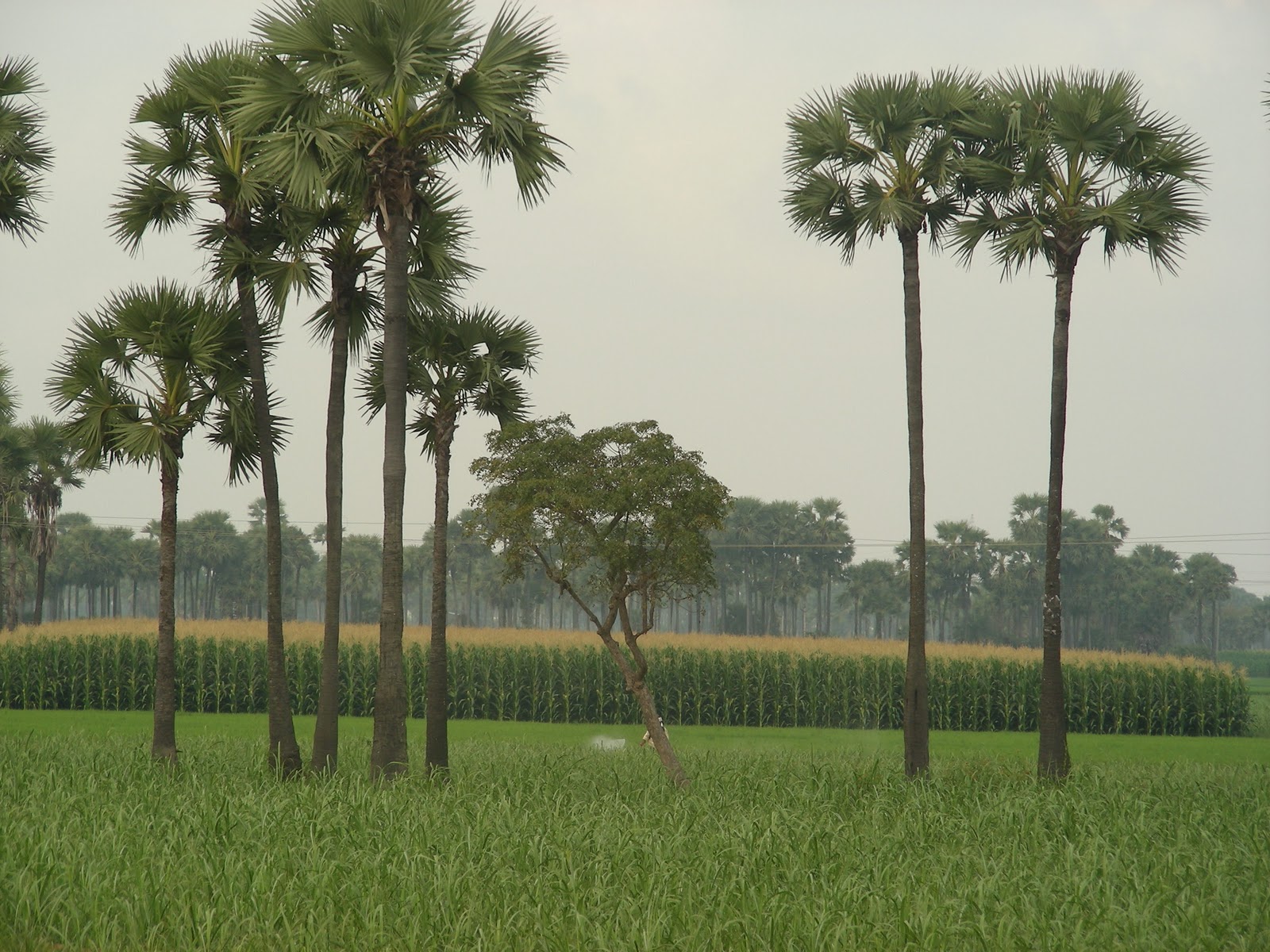
 The geophysical distribution of population and physical structures or amenities that one sees these days; there is a town with population of a few lacs linked around which, within a 25 km radius there are numerous small villages where the average population is a few thousand, occasionally less. This scenario repeats every 40 to 50 kms until another town appears.  The towns definitely have high schools; some would have a collage, there are hospitals with doctors, market, shops and businesses, government offices, motorable roads, street lights, RCC buildings with electricity, railway station, bus station, goods and cargo transport vehicles, police station, a drainage system albeit open constructed along the road leading to a desolate location outside the town and other infrastructure of such likes.  The people are generally either traders or shop keepers that is the business community or the employees and workers that is the service provider community. They are busy throughout the day with a basic objective of trying to earn money and make a lot of noise either, arguing, shouting, honking, simultaneously while they play aloud film songs. These people are hardly ever at peace.  However some categories of people do not live in such towns. The industrialists live in major cities near their factory, of course some would locate their factory near to the source of raw material but they themselves never stay there. The political rulers also never stay in such towns; they prefer to stay close to the industrialists in major cities. In fact the major cities were erstwhile towns which slowly have evolved into cities. The farmers also never stay in such towns since they also stay close to their source of pride; their land and their village. The village could (I don’t say would) have a primary school without doors and toilets, could have a primary health center without a doctor or medicines, there are no shops and businesses, no roads and transport facility except for the bullock carts, no government offices, no railway bus or police station. The unfortunate villages have houses made of dry bamboo, twigs and logs with dry grass on the roof; every house has an open drain, and of course many without electricity. Some slightly better villages would have houses made of brick and cement however unplastered on the outside. A common factor in all these villages is that majority of the houses do not have a toilet inside. People prefer to defecate in the outdoor, men in the morning and women in the night. The houses generally also accommodate cows, bulls, goats and sheep; animal to work in the farm, means of travel, and to provide milk for food or simply to sell for cash. Attending and caring for these animals makes the whole place disoriented and smelly. The inhabitants in villages nowadays are all farmers, some with land and some without. The noise levels are less as people are either; working in the fields, going to town, returning, or sitting at the local tea vendor cum general store for gossip. The clothes that these villager menfolk wear are mostly white kurta with either pyjama or dhoti and the women mostly wear a dark colored sari. Clothing is nowhere near the colorful and modern designs of the towns and cities. 

Not too long ago, till the 18th century the village was a lively unit where people of every walk of life lived and practiced their trade. People belonging to all the four groups of occupation as defined in the caste system, whether it is the priest, teacher, or soldier, law and order provider or the business man, farmer, or the worker, artisan considered the village worthy of living inspite of the political clout of the towns and cities. The village economy thrived and became the bedrock of culture, religion, art, science, commerce and warfare. Every event or every individual that became popular in the kingdom germinated from a humble village. Every tiny village became the primary block for collection of land revenue and implementation of policies from the court of the king. Food for the population proceeded from the village and still does but then the voice of the village which once upon a time found resonance in the highest court of the kingdom is no longer given an ear. The Panchayat system of local governance had its base in the village and this age old concept still find itself in vogue today.

It is disheartening to observe the total disintegration of the village. Today everything in the village is crumbling down. There is hardly any sight of hygiene and modernity seen in villages now because nobody is interested in staying in the village for long. Most of the members in a village are seniors who have no option to go anywhere else or are far too attached to their land. The expression on their face is pitiable because one can see the signs of despair and defeat. The people of the middle age and the youth have mostly migrated to the towns and cities in pursuit of better education and believing there upon a better future. The people toiling in the farms are probably migrant labours or people who have obtained a leave of absence from their factories to work in the farm and who would move back after the harvest. Over the past decades people have learnt and after comparison between the rural and urban life have opted for the latter. They prefer the hard life of the slums in some town or city rather than the open air of the village because it holds promise of a better future. Life in the village is primarily based on agriculture which without irrigation is only a seasonal activity, involving a lot of hard manual work and unlimited perspiration, and the final remuneration in monetary terms is just not enough to cover the input cost and provide a decent living. One of the reasons why irrigation development does not happen is because funds are diverted to provide for infrastructure in towns and cities. The village community which lives on agriculture to feed itself and the crowds in the towns and cities cannot secure a comfortable life for itself and neither can it visualize a comfortable life in the future. There is no government support in terms of fair policies and neither is there any compassion from the people living in towns and cities who ironically though are entirely dependent for food. As though the town and city population look down upon the villagers, they invariably tease the villagers to join them. This has been happening for long now and one day there would be no one living and willing to live in the village.

Who will protect them against the vagaries of nature, who will support them with a comfortable life after a hard days’ work, who will remunerate them enough to make the whole effort worthwhile, who will make them feel that it is not a thankless occupation? Who cares for the humble villagers anyway?

One day in the future we would see that major corporate houses purchase all the agricultural land available in the country, shift their employees from towns and cities to villages, provide them with decent housing, lifestyle and salaries, mechanize the entire process of farming, bargain with the government for better irrigation systems and then hoard the produce to sell them at optimum profits. That would then be called urbanizing the village.